
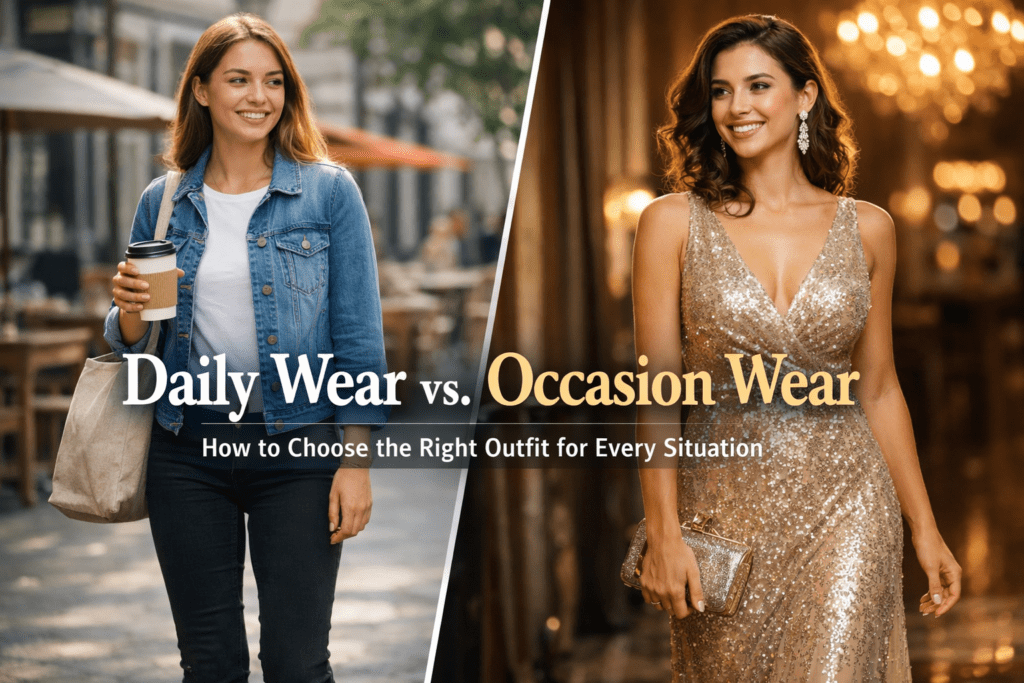
Shopping for women’s clothing online often goes wrong for one simple reason: people confuse daily wear outfits with occasion wear outfits. What looks stylish on a website can feel uncomfortable or inappropriate when worn in real life.
This confusion leads to unused clothes, unnecessary returns, and wasted money. Understanding the difference between daily wear and occasion wear helps you shop smarter and build a wardrobe that actually works.
This guide explains the difference clearly so you can choose the right outfit for the right purpose, without overthinking.
What Is Daily Wear Clothing?
Daily wear clothing is designed for long hours and regular use. These outfits are meant to keep you comfortable throughout your day, whether you’re going to college, work, running errands, or managing household tasks.
A good daily wear outfit does not demand attention. It allows free movement, feels breathable, and does not require constant adjusting. Comfort is not a bonus here, it is the main requirement.
Daily wear outfits usually focus on:
- soft and breathable fabrics
- simple silhouettes
- minimal detailing
- easy care and maintenance
These clothes are worn repeatedly, which means durability and comfort matter more than trendiness.
What Is Occasion Wear Clothing?
Occasion wear is meant for special events and short-duration use. These outfits are designed to stand out visually and are worn for festivals, family functions, parties, or celebrations.
Occasion wear focuses more on design and appearance than long-term comfort. These outfits may include embroidery, richer colors, layered fabrics, or structured silhouettes.
Occasion wear clothing often:
- uses heavier or decorative fabrics
- includes embellishments or prints
- requires careful handling and maintenance
These outfits are worn occasionally, not daily.
Occasion wear is about impact, not endurance.
Daily Wear vs Occasion Wear: Key Differences
Understanding the difference becomes easy when you compare them side by side.
| Feature | Daily Wear | Occasion Wear |
|---|---|---|
| Purpose | Regular use | Special events |
| Comfort | Very high | Medium |
| Fabric | Cotton, Rayon | Crepe, Silk blends |
| Design | Simple | Detailed |
| Wear Duration | Long hours | Short duration |
| Maintenance | Easy | Requires care |
This comparison alone can prevent most wrong purchases.
Fabric Choice: The Biggest Deciding Factor
Fabric plays the biggest role in deciding whether an outfit is daily wear or occasion wear.
Fabrics Best for Daily Wear
Cotton and rayon are ideal for daily wear because they:
- allow air circulation
- absorb sweat
- feel soft on the skin
These fabrics are especially suitable for Indian weather and long working hours.
Fabrics Best for Occasion Wear
Crepe, silk blends, chiffon, and georgette are more common in occasion wear. They drape well and hold design details beautifully but are not ideal for extended wear.
Choosing fabric based on usage makes shopping far easier.
Design & Detailing: Simple vs Decorative
Daily wear designs are intentionally minimal. Heavy embroidery, sequins, or metallic prints may look attractive online but can feel uncomfortable or impractical for daily use.
Occasion wear, however, benefits from these decorative elements because it is worn for limited hours. This is where contrast dupattas, embroidery, and richer colors make sense.
A simple rule:
If it needs careful handling, it’s probably not daily wear.
Fit & Silhouette Matter More Than You Think
Daily wear silhouettes are relaxed and forgiving. They allow you to sit, walk, and move freely without restriction.
Occasion wear silhouettes are more structured and styled for appearance.
Common Daily Wear Fits
- Straight cut
- A-line
- Relaxed fits
Common Occasion Wear Fits
- Anarkali
- Layered styles
- Structured or flared designs
Neither category is better. They just serve different purposes.
Can One Outfit Work as Both Daily and Occasion Wear?
Yes, some outfits fall into a versatile category. These outfits have:
- lightweight fabric
- minimal but elegant design
- neutral or balanced colors
With minimal styling, they work as daily wear. With statement jewellery and accessories, they become suitable for small occasions.
These are the most valuable pieces in a wardrobe.
Design & Detailing: Less vs More
Daily wear designs are simple for a reason. Heavy embroidery, sequins, or metallic prints may look attractive online but feel impractical in real life.
Occasion wear, on the other hand, uses design to create impact. This is where embroidery, contrast dupattas, and richer colors make sense.
Ask Yourself This Question
“Can I sit, walk, eat, and move comfortably in this outfit for hours?”
If the answer is no, it’s probably not daily wear.
Fit & Silhouette: Comfort vs Structure
Daily wear silhouettes are relaxed. They allow movement and flexibility. Occasion wear silhouettes are more structured and defined.
Daily Wear Fits
- Straight cut
- A-line
- Relaxed fits
Occasion Wear Fits
- Anarkali
- Layered silhouettes
- Fitted or flared styles
Neither is better. They just serve different purposes.
Daily Wear vs Occasion Wear Comparison Table
| Feature | Daily Wear | Occasion Wear |
|---|---|---|
| Fabric | Cotton, Rayon | Crepe, Silk blends |
| Comfort | High | Medium |
| Design | Simple | Detailed |
| Wear Duration | Long hours | Short duration |
| Maintenance | Easy | Requires care |
| Styling | Minimal | Accessory-focused |
How Lifestyle Should Decide Your Outfit Choice
One mistake many shoppers make is choosing clothes based on how they want their life to look, not how it actually is. An outfit that looks perfect for brunch photos may not work for someone who spends most of the day commuting, sitting, or moving around.
Before buying any outfit, think about your routine honestly. If your day involves long hours, travel, or physical activity, daily wear clothing with breathable fabric and relaxed fits will always serve you better. Occasion wear makes sense only when your lifestyle includes regular events or celebrations.
Fashion should match your daily reality, not an occasional fantasy.
The right outfit supports your routine instead of fighting it.
Budget Planning: Daily Wear vs Occasion Wear Spending
Another important factor that people often ignore is how much to spend on which category. Daily wear clothes are worn frequently, washed often, and need replacement sooner. Occasion wear is worn less but expected to look special.
A smart shopping approach is
- invest moderately in daily wear basics
- spend a little more on well-chosen occasion wear
- avoid overspending on outfits with limited use
Buying expensive daily wear that wears out quickly or cheap occasion wear that looks dull is where most regret comes from.
When you match your budget with usage, your wardrobe becomes more balanced and practical.
Weather and Season Play a Bigger Role Than You Think
Indian weather changes how outfits behave. A kurti that feels fine in winter may feel unbearable in summer. This is why many buyers feel confused after receiving their orders.
Daily wear outfits should always be chosen keeping heat, humidity, and season in mind. Occasion wear gives you more flexibility because it’s worn for shorter durations, often indoors or in the evening.
If an outfit feels uncomfortable just thinking about the weather, it’s probably the wrong choice for daily use.
Maintenance and Care: The Hidden Cost of Clothing
Maintenance is rarely discussed, but it matters a lot. Daily wear clothes should be easy to wash, dry, and rewear. If an outfit needs special washing, ironing, or storage, it automatically becomes unsuitable for daily wear.
Occasion wear can demand extra care because it’s worn less often. But when daily wear outfits require the same level of care, they quickly become frustrating.
Ask yourself:
- Can I wash this at home easily?
- Will it need frequent ironing?
- Will I avoid wearing it because of maintenance?
If yes, it doesn’t belong in the daily wear category.
Building a Wardrobe With Clear Purpose
When daily wear and occasion wear are clearly separated in your mind, shopping becomes simpler. You stop buying clothes “just in case” and start buying clothes with intention.
A functional wardrobe usually has:
- reliable daily wear outfits you repeat confidently
- a few well-chosen occasion wear pieces
- some versatile outfits that can move between both
This balance prevents clutter and reduces shopping stress.
A good wardrobe isn’t big. It’s clear.
Why This Understanding Improves Online Shopping
Online shopping works best when expectations are realistic. Knowing whether an outfit is daily wear or occasion wear helps you:
- read product descriptions more carefully
- judge fabric and design honestly
- avoid impulse buying
This understanding leads to fewer disappointments and more satisfaction with what you buy.