
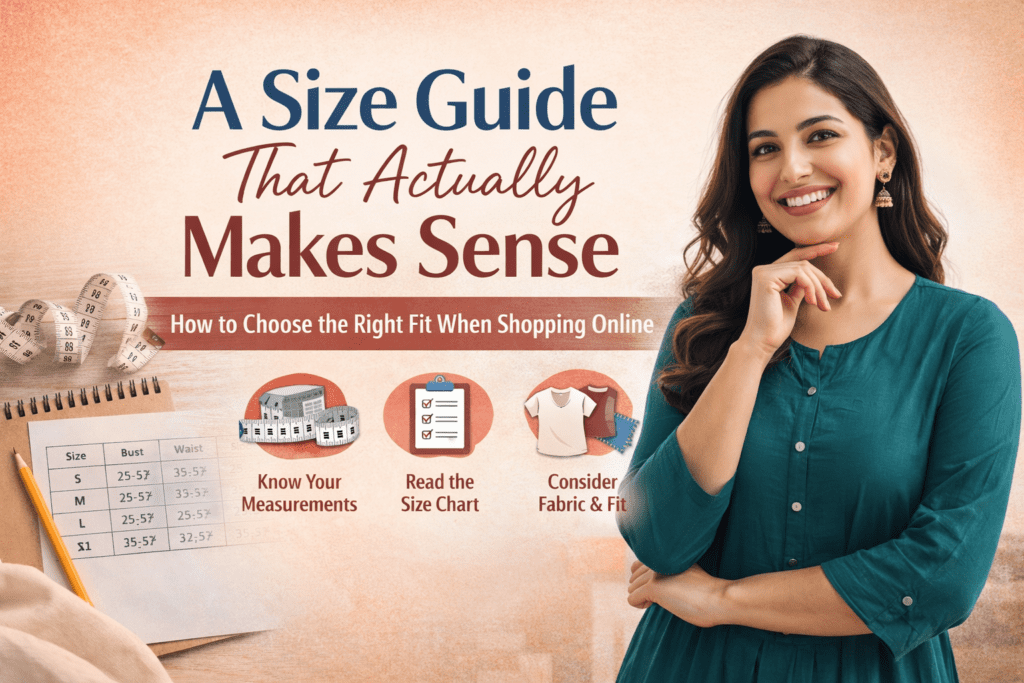
Let’s be honest.
Size is the biggest reason online clothing shopping fails.
You order your usual size, wait excitedly, and when it arrives, it’s either too tight, too loose, or just… wrong. Then comes the disappointment, the return process, or worse — the outfit stays in your cupboard with tags still on.
This happens because most size guides are confusing, incomplete, or unrealistic. Letters like S, M, and L don’t mean much when every brand follows a different sizing logic.
This blog is a practical guide to help you understand sizing properly so you can choose the right fit with confidence, not guesswork.
The right size doesn’t change your body. It respects it.
Why Online Sizes Feel So Inconsistent
One of the biggest myths in fashion is that a size is universal. It isn’t.
A medium in one brand can feel like a small in another. Some brands size for height, some for bust, some for hips, and some just follow outdated charts. This is why relying only on the size label almost always leads to confusion.
Another reason sizing feels wrong is because fabric, cut, and fit style are rarely explained clearly. A relaxed-fit kurti in size M will feel very different from a fitted kurti in size M.
Understanding this difference is the first step to smarter shopping.
Size vs Fit: They Are Not the Same Thing
Many shoppers confuse size with fit, but they are not interchangeable.
- Size is a measurement range
- Fit is how the garment sits on your body
Two outfits can be the same size but feel completely different because of fit.
Common Fit Types
- Relaxed fit – loose and comfortable
- Regular fit – balanced, neither tight nor loose
- Fitted fit – closer to the body
Knowing which fit you prefer matters just as much as knowing your size.
If you ignore fit, size alone won’t save you.
How to Take Your Measurements (The Right Way)
You don’t need professional tools. A simple measuring tape is enough.
Take measurements while wearing normal clothes, not tight shapewear.
Key Measurements You Need
- Bust – around the fullest part
- Waist – the narrowest part of your torso
- Hips – the widest part of your lower body
- Shoulder width – edge to edge
- Kurti length – from shoulder to desired length
Write these numbers down. They will help you more than guessing your size ever will.
Understanding Size Charts Properly
Most people glance at size charts and still choose their “usual” size. That defeats the purpose.
A size chart should be read like a reference, not a suggestion.
Example Size Chart
| Size | Bust (inches) | Waist (inches) | Hips (inches) |
|---|---|---|---|
| S | 34–35 | 28–29 | 36–37 |
| M | 36–37 | 30–31 | 38–39 |
| L | 38–39 | 32–33 | 40–41 |
| XL | 40–41 | 34–35 | 42–43 |
If your measurements fall between sizes, always size up, especially for fitted styles.
How Fabric Affects Size Choice
Fabric plays a massive role in how a size feels.
Stretch vs Non-Stretch Fabrics
- Cotton and linen have little stretch
- Rayon has slight give
- Crepe and blends vary
Non-stretch fabrics should never be bought too tight. Stretchy fabrics allow a little flexibility but still shouldn’t feel restrictive.
If a website doesn’t mention fabric type clearly, that’s a red flag.
Good fabric information is part of good sizing.
Choosing Size Based on Outfit Type
Different outfits need different sizing logic.
For Daily Wear
Daily wear should never feel tight. You need room to move, sit, and breathe.
- Choose relaxed or regular fit
- Size up if unsure
- Avoid tight chest and arm areas
For Occasion Wear
Occasion wear can be slightly more structured, but comfort still matters.
- Focus on bust and shoulder fit
- Avoid overly tight waistlines
- Remember it will be worn for shorter durations
Common Sizing Mistakes Women Make
Many women make the same mistakes repeatedly while shopping online.
1. Buying Smaller Size for Motivation
Clothes don’t motivate weight loss. They just sit unused.
2. Ignoring Shoulder Fit
Bust can be adjusted, shoulders cannot. Always prioritize shoulder fit.
3. Choosing Tight for “Shape”
Good tailoring creates shape, not tightness.
4. Assuming Returns Will Fix It
Returns take time and energy. Choosing right the first time matters.
Comfort is not a compromise. It’s a requirement.
How Body Type Affects Size Choice
Two women with the same bust size may need different sizes because of body shape.
- Pear-shaped bodies may need size based on hips
- Apple-shaped bodies may need size based on bust
- Hourglass bodies should prioritize waist definition
- Petite bodies should focus on length, not just width
This is why checking multiple measurements matters.
When to Size Up (Always)
There are situations where sizing up is the smarter move:
- Non-stretch fabric
- Fitted designs
- Heavy embroidery or lining
- Summer wear (for airflow)
You can always tailor slightly loose clothes. Tight clothes have no solution.
Reading Product Descriptions Like a Pro
Good product descriptions usually mention:
- fabric type
- fit style
- model size and height
- garment length
If these details are missing, sizing becomes guesswork. Trust brands that give complete information.
A Practical Size-Choosing Checklist
Before clicking “Buy Now”, ask yourself:
- Do I know my measurements?
- Is the fabric stretchable or not?
- Is the fit relaxed or fitted?
- Where will I wear this outfit?
- Will I be comfortable wearing this for hours?
If the answers make sense, your size choice probably does too.
Why a Clear Size Guide Builds Trust
As a customer, nothing builds trust faster than honest sizing. Brands that explain sizing clearly:
- reduce returns
- create repeat buyers
- stand out from competitors
A clear size guide tells customers: we care about your experience, not just the sale.
Final Thoughts
Online shopping doesn’t fail because of bad clothes. It fails because of bad sizing decisions — often caused by poor information.
When you understand your measurements, read size charts properly, and consider fabric and fit, choosing the right size becomes much easier.
The right size won’t change how you look. It will change how you feel — more comfortable, confident, and satisfied with your purchase.
Clothes should fit your body. Your body should never adjust to clothes.